





Industrial Drying Process
Our fertilizer drying equipment is designed to remove excess moisture from granular products gently and uniformly, guaranteeing consistent, high-quality output. We provide an industrial drying process with end-to-end services from initial design to full-scale operation, ensuring that your fertilizer plant design and drying line run efficiently and meet the demands of modern agriculture.
STEP 1 : Wet Material Feeding
- Wet material receiving from stockpile, big-bag, or an upstream process — fertilizer granules from a granulation plant, minerals, sand, ores, and other bulk solid materials
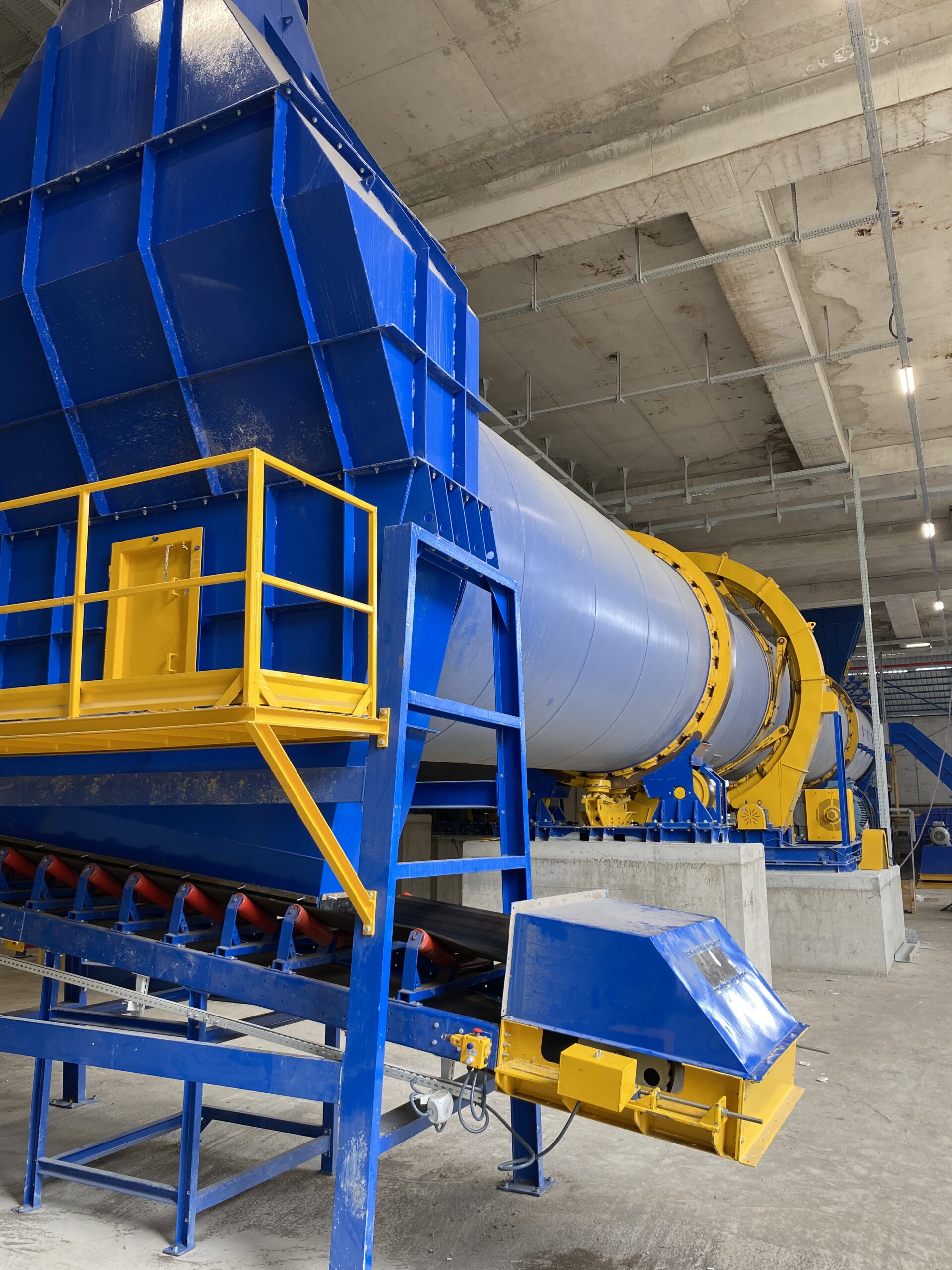
- Belt or screw feeding with controlled dosing for a stable dryer load and precise control over drying conditions
- Belt conveyors equipped with Variable Frequency Drive (VFD) speed control to optimize throughput and energy efficiency
- Dust collection at transfer points to ensure clean and safe operation, preventing contamination and product loss
STEP 2 : Drying Process
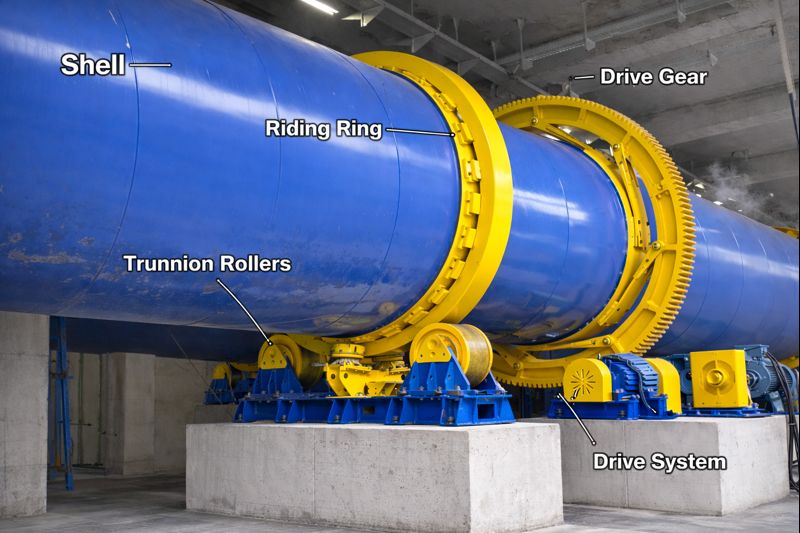
Uniform Drying: A heavy-duty rotary drum dryer with engineered internal flights keeps the material in constant contact with the drying air, removing moisture gradually and uniformly — regardless of the industry it serves. This ensures effective drying and prevents uneven drying or quality deficiencies.
Controlled Hot Air: A dedicated hot air generator with automatic temperature control maintains the drying air within material-safe limits, using co-current or counter-current airflow selected to suit the product’s drying requirements and material properties.
Key Features:
- Heat transfer via convection from heated air ensures efficient moisture removal.
- Monitoring of inlet and outlet temperatures in real time to maintain product integrity and avoid excessive energy consumption.
- Capability to handle sensitive materials by controlling high temperatures and drying conditions precisely.
- The drying chamber is designed to optimize airflow and heat distribution for effective drying.
STEP 3 : Cooling and Screening
Product Cooling:
- Rotary coolers reduce product temperature after drying, enabling safe handling, storage, and packaging.
- Cooling helps preserve the final product quality and prolong shelf life by preventing thermal degradation.
Screening & Classification:
- Vibrating screens separate oversize and undersize particles, ensuring only on-spec product moves downstream in NPK fertilizer granulation lines.
- Off-spec material can be milled and returned to the drying process, improving yield and reducing waste.
- Screening supports preparation for further processing by ensuring consistent particle size distribution.
STEP 4 : Dedusting
- An integrated dedusting system, including cyclones with a bag filter or wet scrubber, cleans the dryer exhaust.
- This minimizes product loss, controls dust emissions, and keeps the facility clean in any industrial drying application.
- Recovered fines are fed back into the process, enhancing material efficiency and reducing environmental impact.
Work With Us
Designing a reliable fertilizer drying system requires more than standard equipment. It demands durable materials, thermal process accuracy, and systems sized correctly for real production targets.
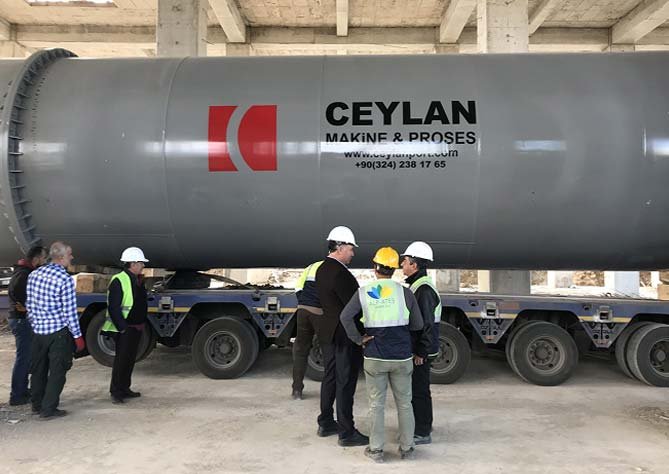
At Ceylan Machine & Process, we build fertilizer drying equipment and industrial drying equipment, including granulation fluid bed dryers for fertilizer production, using high-quality materials, engineered for continuous operation and consistent output.
Every project is designed around your product’s characteristics, throughput requirements, and site conditions. Our systems are delivered with a 1-year machinery guarantee and can be specified with guaranteed production capacity, so performance expectations are clear from the start.
From concept design to commissioning, we support the full lifecycle of your industrial drying facility, ensuring:
- Precise control of drying conditions to meet drying requirements and final product quality requirements.
- Energy-efficient operation to reduce excessive energy consumption and optimize energy use.
- Integration of sensor technology for real-time monitoring of moisture content, temperature, and airflow.
- Adaptation to environmental conditions and production processes for maximum efficiency and product integrity.
Frequently Asked Questions
What is an industrial drying process?
An industrial drying process removes excess moisture from wet bulk materials (fertilizer granules, minerals, sand, ores, and other products), bringing them down to a stable moisture level, often using industrial rotary drum dryers. Proper drying prevents caking during storage and keeps the product free-flowing for handling, packaging, and transport. This process is a critical step in preparing materials for further processing and ensures the final product meets production requirements.
Can the system be customized for specific facilities?
Yes. Industrial drying systems are designed around your material’s characteristics, site layout, available space, and desired output.
Customization may include:
- Dryer sizing and type selection based on material properties and drying methods.
- Hot air generator capacity and airflow configuration (co-current or counter-current).
- Integration with downstream cooling, screening, dedusting, and packaging equipment.
- Implementation of sensor technology and process control systems for precise drying conditions.
How is the drying temperature controlled?
The hot air generator is controlled automatically, and inlet and outlet air temperatures are monitored continuously. This keeps the drying air within material-safe limits, protecting product quality and, for heat-sensitive products such as fertilizer, preserving granule integrity and nutrient content. Precise control helps avoid uneven drying and excessive energy consumption.
Is rotary drying suitable for high-capacity production?
Yes. A properly engineered rotary drying system supports high-capacity industrial drying when paired with suitable feeding, conveying, cooling, and screening equipment. Capacity is confirmed during the system design phase, ensuring the system meets production processes and efficiency goals. This makes rotary drying a cost-effective and efficient choice for large-scale operations.