





MAP / DAP Fertilizer Production Process and Facility
Monoammonium Phosphate & Diammonium Phosphate Process
We deliver comprehensive turnkey solutions for Monoammonium Phosphate (MAP) and Diammonium Phosphate (DAP) fertilizer production processes, ensuring optimal manufacturing performance. Our services cover everything from initial design to full-scale operation of MAP/DAP fertilizer production facilities, guaranteeing smooth equipment function and consistent output of high-quality fertilizer.
Our expertise supports growers and farmers by providing reliable MAP/DAP fertilizer production equipment tailored to handle the complexities of phosphate rock processing and the chemical reactions involved. This ensures the availability of essential nutrients like nitrogen and phosphorus in the fertilizers produced, ultimately enhancing soil fertility and crop yields.

STEP 1 : Raw Material Preparation
The first step in the dap map fertilizer production process involves the careful preparation and handling of raw materials essential for the chemical reactions. This includes:
- Ammonia Storage and Handling System: Ammonia is stored under controlled conditions to maintain its purity and prevent losses. Proper handling systems ensure safe transfer to the reaction stage.
- Phosphoric Acid Storage and Handling System: Phosphoric acid, a critical source of phosphorus, is stored in corrosion-resistant tanks with precise temperature and concentration monitoring.
- Feed Metering and Ratio Control: Phosphoric acid and ammonia are normally metered independently into the reaction system rather than premixed beforehand. Their feed rates are continuously controlled to maintain the required reaction conditions and final MAP or DAP product grade.
Proper raw-material handling and feed control provide the foundation for stable ammoniation, efficient granulation, and consistent fertilizer quality within an optimized fertilizer plant design.
STEP 2 : Reaction
The central chemical step in MAP and DAP production is the exothermic neutralization of phosphoric acid with ammonia. Industrial plants can use a preneutralizer, a pipe reactor, or a combination of both depending on the selected process technology, plant capacity, phosphoric acid characteristics, and energy requirements.
- Preneutralizer (Agitated Reactor): In the conventional slurry process, phosphoric acid and ammonia are continuously introduced into an agitated reactor where partial or substantial neutralization takes place. A hot, pumpable ammonium phosphate slurry is produced and transferred to the ammoniator-granulator. In conventional DAP production, the preneutralizer commonly operates below the final DAP stoichiometric ratio, with additional ammonia introduced during granulation to complete the reaction.
- Pipe Reactor: In a pipe-reactor process, phosphoric acid and ammonia react rapidly inside a compact tubular reactor. The resulting hot ammonium phosphate slurry or melt is discharged directly into the granulator. Because the reaction heat is utilized very effectively, pipe-reactor systems can reduce the amount of water entering the granulation stage, lower drying requirements, and improve plant capacity and energy efficiency.
- Combined Process Configuration: Some MAP/DAP plants use both a preneutralizer and a pipe reactor. The distribution of the reaction between the two units is selected according to the desired operating conditions and plant performance.
The chemical reactions for each fertilizer are:
- For MAP:
NH3 + H3PO4 → (NH4)H2PO4
This reaction uses a 1:1 molar ratio of ammonia to phosphoric acid, resulting in monoammonium phosphate with one ammonium ion per phosphate. - For DAP:
2NH3 + H3PO4 → (NH4)2HPO4
This reaction uses a 2:1 molar ratio of ammonia to phosphoric acid, producing diammonium phosphate with two ammonium ions per phosphate.
These reactions influence the pH of the fertilizer when dissolved: MAP tends to create a mildly acidic micro-zone (pH ~3.5 to 4.5), while DAP creates a temporary alkaline micro-zone (pH ~7.5 to 8.2), affecting nutrient availability in soils with different acidity or alkalinity.
STEP 3 : Granulation
In this stage, the slurry produced in the reaction is transformed into solid granules suitable for handling and application, mirroring the core steps of a fertilizer granulation plant where process control directly impacts granule quality and performance:
- The slurry is fed directly into a rotary drum granulator, which is the standard equipment used in dap map fertilizer production.
- Conventional MAP and DAP plants commonly use a rotary ammoniator-granulator, where chemical ammoniation and granule growth can occur within the same rotating drum. Other fertilizer processes may use standard rotary drum or pan granulators depending on production capacity, feed properties, recycle requirements and the desired product size.
- Learn more about the differences in our guide to rotary drum granulators versus pan granulators.
- Conventional MAP and DAP plants commonly use a rotary ammoniator-granulator, where chemical ammoniation and granule growth can occur within the same rotating drum. Other fertilizer processes may use standard rotary drum or pan granulators depending on production capacity, feed properties, recycle requirements and the desired product size.
- Inside the rotating drum, seed particles or nuclei are coated with slurry, and the cascading motion promotes granule growth.
- Key factors controlled during granulation include:
- Granule size and shape consistency
- Moisture content to ensure proper granule formation without excessive dust
- Recycle ratio to maintain a stable granulation environment
Proper granulation ensures that the final fertilizer product has the desired physical characteristics for storage, transport, and soil application.
STEP 4 : Drying and cooling
- After granulation, the wet fertilizer granules undergo drying and cooling to stabilize their physical properties:
- Drying: Typically performed in a rotary dryer, this step reduces moisture content to prevent caking and spoilage, leveraging industrial rotary drum dryers engineered for precise temperature and airflow control.
- Cooling: Granules are cooled in rotary or fluidized-bed coolers to bring them to ambient temperature, enhancing product stability.
These steps also help in maintaining granule strength and preventing degradation during storage.
Effective drying and cooling are essential to preserve fertilizer quality and facilitate handling.
STEP 5: Screening and Milling
The final stage in the dap map fertilizer production process involves size classification and adjustment:
- Multi-stage screening systems separate granules into different size categories, ensuring uniformity, just as in integrated NPK fertilizer granulation systems where screening is critical to final product consistency.
- Crushing systems break down oversized granules into smaller particles, which are recycled back into the granulation process.
- This stage ensures that the final product meets size specifications required for efficient application and minimizes fines or dust.
Screening and milling improve product quality and optimize fertilizer performance in the field.
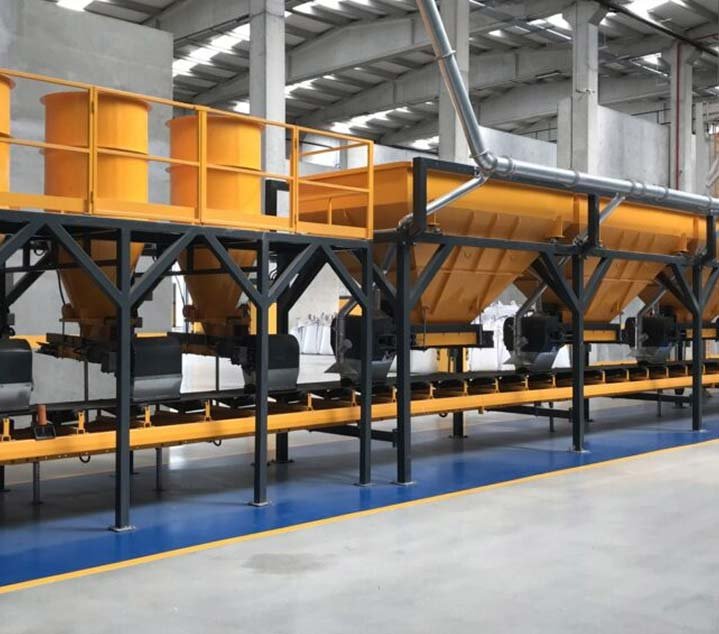
Optimized MAP and DAP Fertilizer Production Processes and Equipment
Key Equipment and Process Insights for Efficient MAP and DAP Fertilizer Production
A DAP fertilizer production process may look simple on paper, but the difference between a DAP or MAP fertilizer production line that “runs” and one that runs predictably comes down to integration details we engineer up front, especially around control stability, corrosion protection, dust handling, and recycle discipline.
Here is what we design for, because it’s what operators fight with later:
- Feed variability tolerance (acid concentration drift, ammonia quality changes, temperature swings) to maintain consistent reaction conditions.
- Stable slurry behavior so that the granulator doesn’t “hunt” between wet lumps and dry dust, ensuring uniform granule formation.
- Recycle ratio control that supports granulation instead of choking the plant with internal circulation, optimizing product quality.
- Moisture and temperature windows that protect granule strength, not just dryer throughput, to enhance fertilizer durability.
- Dust capture points in the DAP fertilizer production process that prevent housekeeping problems, product loss, and unplanned stoppages, aligning with dust control strategies in NPK fertilizer plants that focus on transfer points, screening, and drying operations.
- Maintenance access that makes routine work fast and safe (doors, clearances, lifting joints, spares logic), improving operational efficiency.
- Instrument placement that reflects how plants really behave, not just where sensors are convenient, enabling accurate process control.
These practical considerations are key to reliable DAP MAP fertilizer production and rarely make it into brochure diagrams but are essential for long-term plant operability.
Keeping Reaction and Granulation Behaving Like One System
In many facilities, a modular turnkey fertilizer plant layout helps integrate reaction and granulation so they behave as a single, controllable system rather than isolated unit operations.
A tightly integrated reaction and granulation system ensures smooth transitions between chemical conversion and physical formation, minimizing process disruptions and maximizing fertilizer quality.
Utilities and Operability
Dust and fumes are usually the first operational complaint, long before anyone argues about nameplate tonnage. A good DAP fertilizer production process includes dust capture and gas handling as core design elements.
We plan for:
- Dust collection at transfer points and screening/crushing locations to maintain a clean environment.
- Cyclones or equivalent separation equipment for process gas streams where appropriate.
- Ducting layouts that avoid dead zones and buildup, ensuring efficient airflow.
- Safe access for cleaning and inspection to support routine maintenance.
- Practical containment features such as doors, skirts, and sealing that reduce spillage and environmental impact.
Less dust isn’t just nicer. It protects bearings, reduces fire risk in dry zones, maintains product quality, and shares a responsibility for worker safety and environmental compliance.
Integrating MAP and DAP Production with Fertilizer Blending Systems
Finished MAP and DAP granules can be supplied as straight fertilizers or used as nutrient components in bulk-blended fertilizer formulations. Producers seeking greater formulation flexibility can connect the MAP/DAP production facility to a separate fertilizer blending and packaging section.
In a bulk blending system, finished granular materials such as MAP, DAP, urea and potash are accurately dosed and mechanically mixed to produce customized NPK grades. Effective blending requires compatible granule sizes and bulk densities, strong and dry particles, accurate dosing, and careful material handling to minimize segregation during mixing, storage and transportation.
A blending facility does not produce MAP or DAP through chemical reaction. Instead, it uses finished MAP or DAP granules as raw materials for producing a wider range of fertilizer formulations.
Explore our fertilizer blending systems for high-capacity, flexible NPK production.
Work With Us
Our clients choose Ceylan Machine & Process because:
- We build with high-quality materials selected for real corrosion and wear conditions
- We provide a 2-year guarantee on machinery
- We can guarantee capacity/production tonnage
Fill out the form to get started with reliable MAP/DAP
manufacturing.
Frequently Asked Questions
How do you keep product size consistent in the DAP fertilizer production process?
Consistent product size in the DAP fertilizer production process is achieved through a combination of factors. Maintaining a controlled recycle ratio is essential, as it ensures that the granulator receives the right balance of fines and larger particles to promote uniform granule growth. Stable slurry properties, including moisture content and viscosity, are critical to prevent fluctuations that could cause uneven granulation. Operating the granulator within the correct temperature and moisture window helps maintain granule strength and size consistency. Additionally, efficient multi-stage screening and milling systems separate granules by size and recycle oversized or undersized particles back into the process, ensuring the final product meets strict size specifications. Regular testing and adjustments based on process feedback help maintain this consistency over time.
Can the same site run MAP and DAP on one line?
Often yes, the same production line can be configured to run both MAP and DAP fertilizers, but several considerations must be addressed. The primary limiting factors tend to be the materials used in the wet sections of the production facility, as MAP production involves a more acidic reaction environment compared to DAP. This requires corrosion-resistant equipment and specific material allowances to handle the differing chemical properties safely. Additionally, adjustments in process parameters such as ammonia to phosphoric acid ratios, reaction conditions, and granulation settings are necessary to switch between MAP and DAP production efficiently. Proper planning and flexible equipment design can enable smooth transitions between products, maximizing facility utilization and offering growers a choice based on soil pH and crop needs.
Where do most unplanned stoppages come from in a DAP fertilizer production process?
Most unplanned stoppages in a DAP fertilizer production process arise from operational and maintenance challenges. Dust build-up is a frequent issue, especially at transfer points, screening, and crushing locations, which can cause blockages or equipment wear if not properly managed. Wear points at material transfers and in rotating equipment can lead to unexpected downtime if regular inspections and maintenance are neglected. Poor access for maintenance tasks can prolong repair times and increase the likelihood of stoppages. Imbalances in recycle ratios can disrupt granulation, causing process instability and potential shutdowns. Additionally, inadequate design of gas handling and dust collection systems can result in environmental and safety concerns, forcing unplanned stops. Incorporating dust capture, corrosion protection, and easy maintenance access during design significantly reduces these risks.