



Fertilizer dosing systems sit at the intersection of two distinct explosion hazard types, and the regulatory framework that applies depends on which hazard is dominant in the specific installation. For plants handling combustible organic dusts, urea, certain NPK blends, and organic-nitrogen sources, the ATEX framework for combustible dust applies, and the dosing system must be specified, installed, and documented to that framework. For plants handling ammonium nitrate, whether as a raw material or as a component of an NPK formula, a separate and more demanding regulatory track governs the installation, and ATEX compliance alone is not sufficient.
Understanding which framework applies, where it applies within the plant, and what it specifically requires of the dosing system hardware is a prerequisite for both specification and procurement. We’ll cover the zone classification framework for fertilizer dosing environments, the engineering requirements that follow from each zone classification, the specific requirements for hopper venting, grounding, and liner specification, and the distinct regulatory position of ammonium nitrate.
Note: this article provides technical guidance for engineers engaged in ATEX compliance planning, not a substitute for a site-specific explosion protection document prepared by a competent person. Zone classification and equipment selection for a specific installation require a formal hazard assessment by a qualified assessor, and the findings must be documented in an Explosion Protection Document (EPD) as required by the ATEX Workplace Directive 1999/92/EC.
Which Fertilizer Materials Create Combustible Dust Hazards
Not all fertilizer materials handled in dosing systems present a combustible dust explosion risk, and correct zone classification starts with identifying which materials do.
Urea dust is combustible. Dry urea dust in air, when dispersed above the minimum explosive concentration (MEC), forms an explosive atmosphere that can be ignited by a spark, hot surface, or electrostatic discharge. The MEC for urea dust is typically in the range of 60–100 g/m³, and the explosion severity (Kst value) is in the low St1 range, meaning it forms a relatively weak but still energetically significant explosion. Urea-handling areas where dry powder can become airborne require ATEX zone classification.
DAP and MAP dusts are generally combustible. Ammonium phosphate dusts can participate in explosive dust-air mixtures, though the ignition sensitivity and explosion severity vary with particle size and moisture content. Fine, dry ammonium phosphate dusts at appropriate concentrations require ATEX treatment.
Muriate of potash (KCl) dust is not combustible. KCl is an inorganic salt with no combustible character. Areas handling KCl as the only material do not create a combustible dust explosion hazard, though other hazards (inhalation, slipperiness) still apply.
NPK compound granule dust: the explosion hazard of mixed NPK dust depends on the composition, specifically the fraction of combustible nitrogen-containing material. NPK formulas with a significant urea or organic nitrogen fraction present a combustible dust risk; those based predominantly on KCl, MAP, and inorganic components may not.
Ammonium nitrate is in a category of its own and is discussed separately below.
Where these materials are handled in a dosing system, inside hoppers, in transfer chutes, at bag tipping stations, in enclosed conveyors, the dust explosion hazard exists during normal operation whenever the material is being moved. The zone classification for these areas should be established on the basis of the most hazardous material that will be present in the installation.
Zone Classification for Fertilizer Dosing Areas
The ATEX zone classification for combustible dust environments uses three zones defined by the frequency and duration of explosive atmospheres:
Zone 20 is an area where an explosive dust-air mixture is present continuously, for long periods, or frequently during normal operation. Inside operating hoppers, conveyors, and dosing units handling combustible fertilizer dusts typically falls into Zone 20, because the dust-air interface inside the equipment is a persistent feature of normal operation. Equipment installed in Zone 20 must meet ATEX Category 1D requirements (the highest protection level for dust).
Zone 21 is an area where an explosive dust-air mixture is likely to occur occasionally in normal operation. The area immediately surrounding a hopper discharge, bag tipping station, or conveyor transfer point, where dust can escape during normal operation, is typically classified as Zone 21, extending to a radius that depends on the material’s dust generation characteristics and the containment of the equipment. Zone 21 requires ATEX Category 2D or Category 1D equipment.
Zone 22 is an area where an explosive dust-air mixture is not likely to occur in normal operation but may occur in abnormal circumstances. The general area of a dosing facility where combustible dust may accumulate on surfaces and be disturbed by air currents or cleaning activities may be Zone 22, depending on the housekeeping standard and the enclosure of the primary dust sources. Zone 22 requires ATEX Category 3D, 2D, or 1D equipment.
The zone boundaries for each installation depend on the specific equipment configuration, the material’s dust characteristics, the containment and extraction design, and the operational profile of the plant. Zone classification is a site-specific assessment, not a universal prescription.
Hopper Vent Sizing for Combustible Fertilizer Dusts
For hoppers or silos containing combustible fertilizer dust in Zones 20 or 21, explosion relief venting is one of the primary passive protection measures. The principle is to provide a vent opening that relieves the pressure of a contained explosion quickly enough to prevent the vessel from catastrophically failing.
The design methodology for explosion venting in dust applications is set out in EN 14491 (the European standard) and ISO/IEC equivalents. The vent area calculation requires:
The Kst value of the dust: the normalised rate of pressure rise in a standardised 1m³ test vessel, in bar·m/s. Combustible fertilizer dusts typically have Kst values in the St1 range (Kst ≤ 200 bar·m/s), depending on the specific material and particle size. For urea dust, Kst values are typically in the range of 80–150 bar·m/s, depending on particle size and moisture content. Site-specific dust characterisation by a test house with representative material samples is more reliable than applying a generic literature value, particularly for NPK blends where the composition and particle size affect the explosion parameters.
The maximum pressure the vessel can withstand (Pred): the structural design pressure of the hopper, which sets how much pressure can build before structural failure occurs.
The vessel volume and length-to-diameter ratio: larger vessels require proportionally larger vent areas.
The vent opening static activation pressure (Pstat): the pressure at which the vent opens.
These parameters are combined in the EN 14491 calculation procedure to produce the required vent area. For hoppers used in fertilizer dosing applications larger than a defined threshold volume (the applicable standard specifies conditions under which venting is required), the vent area calculation should be performed by a competent person and documented in the EPD. Undersized vents do not provide adequate protection and represent a compliance failure as well as a safety risk.
Vents must be positioned and ducted so that the fireball and pressure wave released in a venting event are directed to a safe area, typically the exterior of the building. Vent placement inside enclosed plant rooms requires flameless vent devices or ductwork designed to withstand vent discharge pressures.
Grounding and Bonding Requirements
Electrostatic discharge is one of the ignition sources that ATEX zone classification is designed to control, and in fertilizer dosing applications where fine powder can carry significant static charge, grounding and bonding of the equipment is a basic compliance requirement.
All conductive elements of the dosing system, hoppers, frames, feeders, conveying components, and connecting chutes, must be electrically bonded to each other and connected to a common earth ground with a resistance to earth that meets the applicable standard. For ATEX Zone 20 and 21 installations with dust explosion hazards, the resistance to earth is typically required to be below a threshold set by the zone classification and the material’s ignition sensitivity; specific values are defined in EN 13463 and supporting standards, and the exact requirement for a given installation should be confirmed against the formal hazard assessment.
Grounding continuity should be verified at installation and re-verified on a regular maintenance schedule, since connection points can corrode or loosen in the corrosive environment of a fertilizer plant. A grounding continuity log maintained as part of the Explosion Protection Document supports both compliance demonstration and ongoing maintenance management.
Antistatic Liner Requirements
Many fertilizer dosing systems use polymer liners, UHMW-PE, polyurethane, or similar materials, in hoppers and chutes to prevent material adhesion and improve flow. In ATEX Zone 20 and 21 areas, the electrical properties of these liners must be compatible with the zone classification.
Standard UHMW-PE is an electrical insulator with surface resistivity well above the threshold at which static charge can accumulate without dissipating to earth. If a significant thickness of insulating liner material is present between the powder and the earthed metal structure of the hopper, static charge generated by powder movement can accumulate on the liner surface rather than being conducted to earth. If a discharge occurs from this accumulated charge, it may be energetic enough to ignite a susceptible dust-air mixture.
In ATEX Zone 20 and 21 installations, liner materials should either be inherently conductive or antistatic-grade materials (UHMW-PE with carbon black or other conductive loading is available in antistatic grades with defined surface resistivity), or the liner thickness and surface area should be reviewed against the relevant ATEX standards to confirm that the charge accumulation potential is within acceptable limits. The applicable standard is IEC 60079-32-1 (guidance on electrostatics) and EN 13463, and the assessment should be documented in the EPD. Simply specifying a polymer liner without confirming its antistatic properties in the context of the zone classification is a common gap in ATEX compliance documentation for fertilizer plant installations.
Ammonium Nitrate: A Separate Regulatory Track
Ammonium nitrate requires special mention because it does not follow the standard combustible dust ATEX framework, and treating it as if it does results in an inadequate risk assessment.
Ammonium nitrate (AN) is an oxidiser rather than a fuel. Unlike combustible dusts, which require a fuel-air mixture and an ignition source to cause an explosion, AN can undergo exothermic thermal decomposition and detonation under the right conditions of confinement, contamination, and temperature even in the absence of an external air-fuel combustion mechanism. The hazard profile of AN in storage and handling is fundamentally different from that of a combustible dust, and the engineering controls required to manage it safely, including contamination control, segregation from organic materials, and confinement management, go beyond what the ATEX dust directive addresses.
In the EU, installations handling ammonium nitrate above defined threshold quantities are subject to the Seveso III Directive (2012/18/EU) for major accident prevention, in addition to any applicable ATEX requirements for other materials on site. The Control of Major Accident Hazards (COMAH) regulations implement this directive in the UK; similar national implementations apply across EU member states.
Plants producing NPK fertilizers that contain ammonium nitrate as a nitrogen source must obtain a site-specific hazard assessment from a competent person with AN-specific experience, and cannot rely solely on a standard ATEX combustible dust zone classification document as their complete explosion protection framework.
Documentation Requirements
ATEX compliance for fertilizer dosing installations is not only about hardware specification, but it also requires documentation that demonstrates the compliance assessment has been performed and maintained.
The Explosion Protection Document (EPD), required under ATEX Workplace Directive 1999/92/EC, must describe the zone classification, the equipment category selected for each zone, the explosive atmosphere characteristics of the hazardous materials, the protective measures in place, and the responsibilities for maintaining those measures. The EPD must be established before work in hazardous areas begins and must be kept up to date when changes are made to the installation, the materials handled, or the operating procedures.
Equipment supplied into ATEX-classified zones must carry the appropriate CE marking and ATEX certification documentation confirming the category and equipment group for which it is certified. Procurement documentation for all electrical and mechanical equipment installed in classified zones should capture and retain this certification information for the life of the installation.
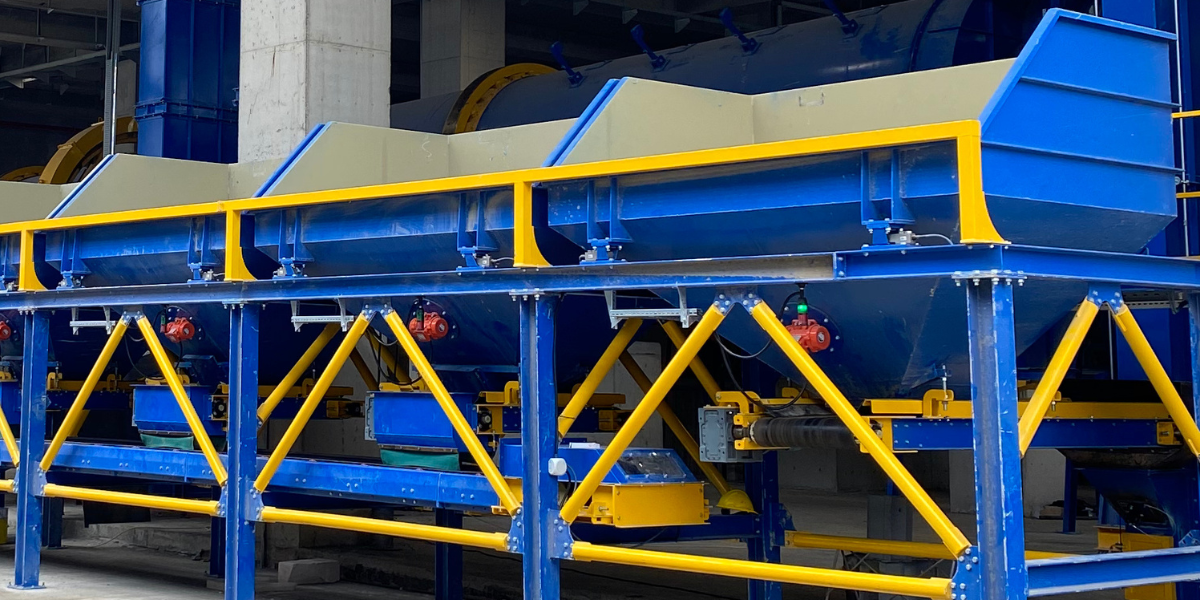
Ceylan Machine & Process manufactures fertilizer dosing systems with IP65 or higher protection class, suitable for integration into ATEX-compliant installations for NPK, DAP, MAP, and other fertilizer handling environments. For technical enquiries on ATEX requirements for your specific dosing application, or to discuss equipment specification for classified zones, contact our engineering team.