
The liner inside a granulation drum does more than protect the shell. It directly influences how the granulating bed behaves – how the material cascades, how the lifters interact with the bed surface, whether product builds up and sticks, and how much noise and vibration the drum generates during normal operation. Getting the liner choice wrong doesn’t just mean more maintenance; it tends to show up first as process instability that’s easy to misread as a binder or formula problem.
We’ll compare the two liner types most commonly used in fertilizer drum granulators – EPDM rubber and steel – across chemical resistance, impact absorption, wear characteristics, replacement requirements, and lifetime cost per tonne, and cover what determines which is the right choice for a given application.
What the Liner Actually Does
The liner serves three distinct functions inside a granulating drum. First, it protects the carbon steel shell from direct chemical and abrasive attack by the granulating slurry – particularly important in NPK and ammonium phosphate production where the process environment combines chemical aggressivity with abrasive granule impact. Second, it provides the surface that the lifter plates are either mounted to or integrated with, and the interaction between the lifter geometry, the liner surface, and the granulating material determines how the bed cascades and how uniformly it’s distributed around the drum. Third, it acts as a thermal and acoustic buffer between the process and the steel shell.
The liner is also, practically speaking, the wear component of the drum – it’s designed to be replaced when worn rather than allowing the shell itself to degrade. Getting the liner change strategy right is therefore a significant part of managing the drum’s total cost of ownership over its operating life.
EPDM Rubber Liners
EPDM, a terpolymer of ethylene, propylene and a small proportion of a diene comonomer, is the liner material of choice for most NPK, DAP, MAP, and ammonium sulphate granulation applications, and there are clear engineering reasons for that.
Chemical resistance. EPDM has good resistance to the range of compounds typically encountered in fertilizer granulation: ammonium salts, urea-based and other hygroscopic nitrogen sources, phosphate-based binders and slurries, and dilute acids and bases. It is attacked by mineral oils and other hydrocarbons, which matters if oil-based coating or anti-caking agents can reach the drum. On temperature, the granulating bed in an NPK drum typically runs at around 60 to 90°C, comfortably inside the continuous service range of fertilizer-grade EPDM, which is roughly 120 to 150°C depending on the cure system, with short excursions tolerated above that. It’s less suitable for concentrated phosphoric acid or for sustained contact with strongly oxidising compounds, so the chemical environment of the specific process should be verified against the EPDM grade being specified before installation.
Impact absorption. The rubber liner absorbs the impact energy of granules cascading from the lifter plates and falling through the bed. This matters for granule integrity – particularly at the early stages of granule formation when particles are relatively fragile – and for the structural loading on the shell. A steel liner transmits impact energy more directly to the shell; a rubber liner dampens it. This also has a meaningful effect on noise: drums with EPDM liners are generally quieter than those with steel liners at the same operating speed and fill, which is a practical consideration for working environments with noise exposure limits.
Anti-stick characteristics. EPDM tends to have lower product adhesion than bare steel, which helps prevent granule build-up on the liner surface. Product build-up inside the drum progressively changes the effective internal diameter and disrupts the designed bed geometry, eventually requiring a production stop to clear it. A well-specified EPDM liner, combined with correctly angled inlet and outlet chutes, tends to reduce the frequency of these clean-out stops compared to a steel-lined drum in similar service.
Wear and service life. EPDM liner wear is driven primarily by the abrasive action of the granulating bed, the operating temperature, and the chemical aggressivity of the process. Under standard NPK granulation conditions, properly installed EPDM liners can give extended service between replacement intervals, though the specific duration depends on throughput, formula, and process temperature and should be treated as application-specific rather than a universal figure. Failure mode is typically gradual thinning and eventual tearing or delamination at the edges – both detectable by routine inspection before they cause a process problem.
Replacement. EPDM liner panels are lighter than steel alternatives, which makes the liner change process more manageable from a handling standpoint. An overlapping sheet system that is both adhesive-bonded and mechanically retained to the shell prevents granulating material from working its way behind the liner – a progressive failure mode that, once it starts, tends to accelerate detachment. The liner change itself is typically carried out during a planned maintenance stop rather than requiring a major structural repair.
Steel Shell Liners
Steel liners – typically mild steel or wear-resistant plate in grades selected for the specific abrasion duty – are used where EPDM is either thermally unsuited or where the abrasive duty exceeds what rubber can handle reliably.
Chemical and thermal resistance. Steel liners can handle higher sustained process temperatures than EPDM, and wear-resistant grades survive abrasive duty that would tear rubber. Chemical resistance is not their advantage: mild and wear-resistant carbon steels corrode faster than EPDM in acidic service, which is why rubber lining is the standard answer for acid duty in the first place. Where the process is chemically aggressive rather than hot or abrasive, the alternative to EPDM is a stainless grade, not carbon steel plate. For processes operating significantly above the thermal tolerance of EPDM, or where the abrasive duty exceeds what a rubber liner will survive, steel liner variants are the practical alternative.
Wear characteristics. Steel liner wear is more predictable in highly abrasive duty – the liner thins gradually from the working surface rather than delaminating – and the wear rate can be tracked by periodic thickness measurement. Wear-resistant steel grades extend the interval between replacements compared to mild steel in high-abrasion service. The failure mode is progressive thinning to a minimum specified thickness, at which point the liner is replaced. Unlike EPDM, which tends to give visual warning signs of delamination or tearing, a steel liner close to its wear limit may look structurally sound while no longer providing adequate shell protection.
Impact transmission. Steel liners transmit more of the granule impact energy to the shell compared to rubber, which increases structural loading on the shell and increases noise levels. In most NPK granulation applications, this is not a critical factor – but it’s worth considering in plants with strict noise exposure requirements or in cases where granule fragility at early formation stages is a concern.
Replacement. Steel liner panels are roughly three times heavier than EPDM panels covering the same area, even though steel is specified at a smaller thickness, which makes the change process more physically demanding and typically requires lifting equipment in the drum interior. Installation requires welding or heavy mechanical fastening rather than the bonding and overlapping method used for rubber liners.
Lifetime Cost per Tonne: A Framework
The right way to compare liner options is not on purchase price but on cost per tonne of product over the liner’s service life. The components of that calculation are:
(Liner material cost + installation and labour cost + the value of production lost during the changeout) ÷ tonnes of product produced between replacements = cost per tonne for that liner system.
This calculation needs to be done against your actual plant data – your throughput, your formula, your process temperature, and the liner service life you’ve actually observed or can get validated data for from the supplier. Be cautious about supplier-provided service life figures that aren’t supported by reference to comparable applications – the variables that affect liner wear are process-specific enough that generalised claims are hard to validate.
What’s often overlooked in this comparison is the cost of unplanned liner failures. A liner that fails unexpectedly mid-campaign – causing a production stop to clear debris from the process, inspect the drum, and carry out an unplanned replacement – carries a cost that doesn’t appear in the planned maintenance cost per tonne. EPDM liners, with their more visible failure modes, tend to give earlier warning of end-of-life than steel liners under uniform abrasion. That earlier warning has real value for production scheduling.
For most NPK, DAP, MAP, and urea-based granulation applications at standard process temperatures, EPDM is the established liner choice. Steel liners are worth considering where the process conditions – temperature, chemical concentration, or abrasive duty intensity – fall outside the reliable operating envelope of EPDM grades suited to fertilizer service.
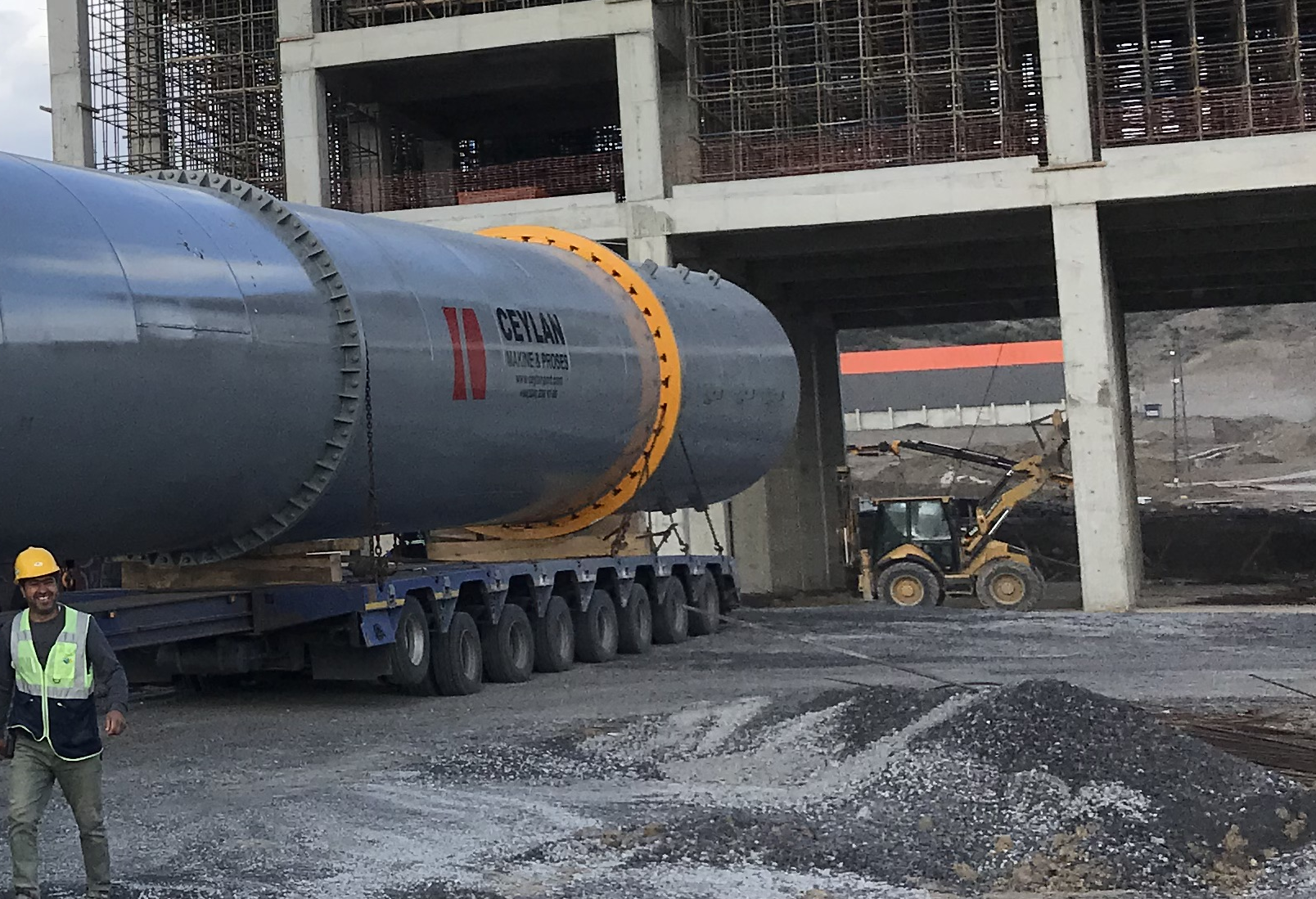
Ceylan Machine & Process manufactures rotary drum granulators with EPDM rubber liner systems for NPK, DAP, MAP, and chemical granulation service. For technical enquiries on liner specification or to discuss your process conditions, contact our engineering team.