



Fertilizer Plant Design Services
In fertilizer plant design, well before manufacturing begins, it is essential to determine how machinery will efficiently connect raw material handling to large-scale industrial output.
At Ceylan Machine & Process, we focus on fertilizer plant engineering by designing fertilizer granulation processes and production systems and facility layouts that optimize your granulation loop for maximum operational efficiency.
Scope of Our Design Services
Our approach to fertilizer plant design is turnkey and modular, encompassing every phase from initial concept development through to final operational readiness. These comprehensive services include:
- Feasibility Studies: Our experienced mechanical engineers and process engineers conduct thorough assessments of the technical and economic viability of your fertilizer production project. This includes evaluating raw material availability, energy consumption projections, environmental compliance requirements, and site selection criteria to ensure optimal plant safety and sustainability.
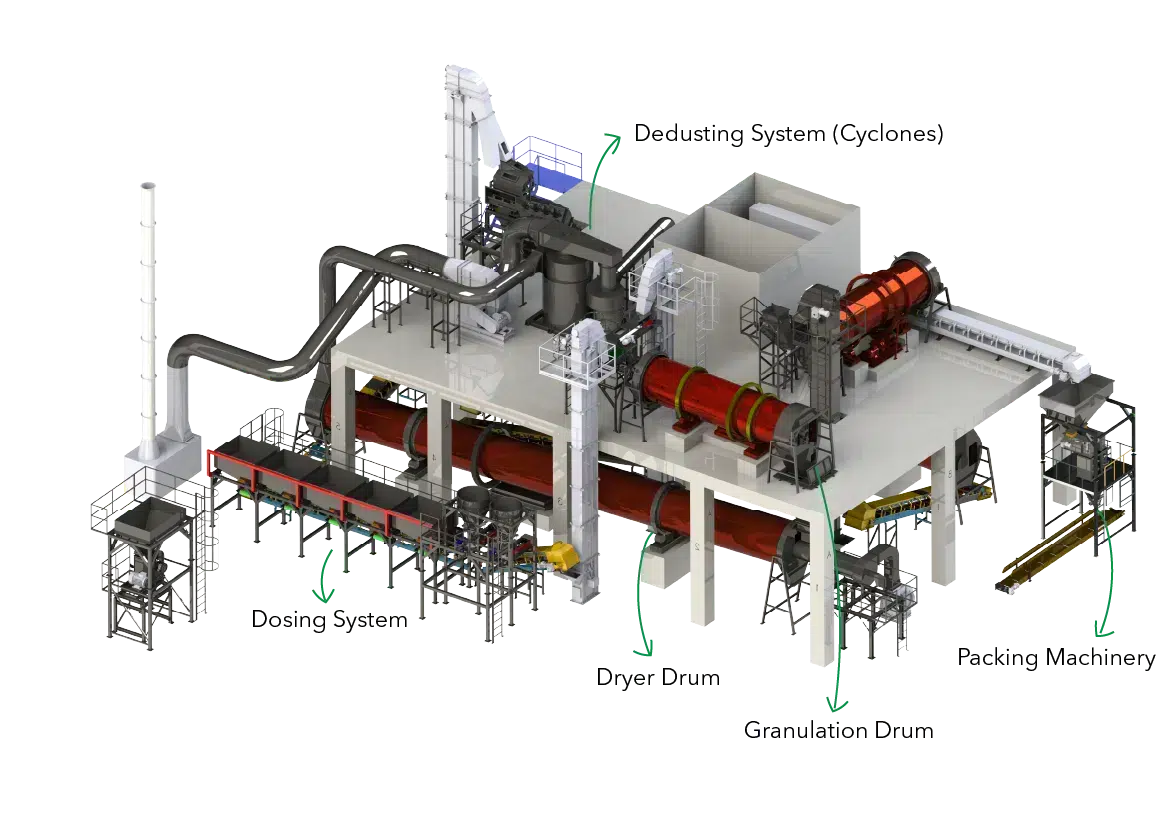
- 3D and 2D Modeling: Utilizing advanced process design software, we create detailed 3D and 2D models of your fertilizer plant. These visualizations, including short animations, allow you to clearly understand the layout, process flow, and integration of process equipment. This step ensures that the design aligns perfectly with your site's specific constraints, such as floor space and ceiling height, while optimizing operational safety and reducing production interruptions.
- Custom Plant Engineering: We tailor each fertilizer plant design to your unique site layout and operational needs. This involves strategic planning of raw material handling areas, fertilizer production units like ammonia plants and urea plants, and storage facilities for finished fertilizer products. Our designs incorporate control systems and material selection strategies that address corrosion resistance, heat transfer efficiency, and mechanical stress factors to enhance plant longevity and operational safety.
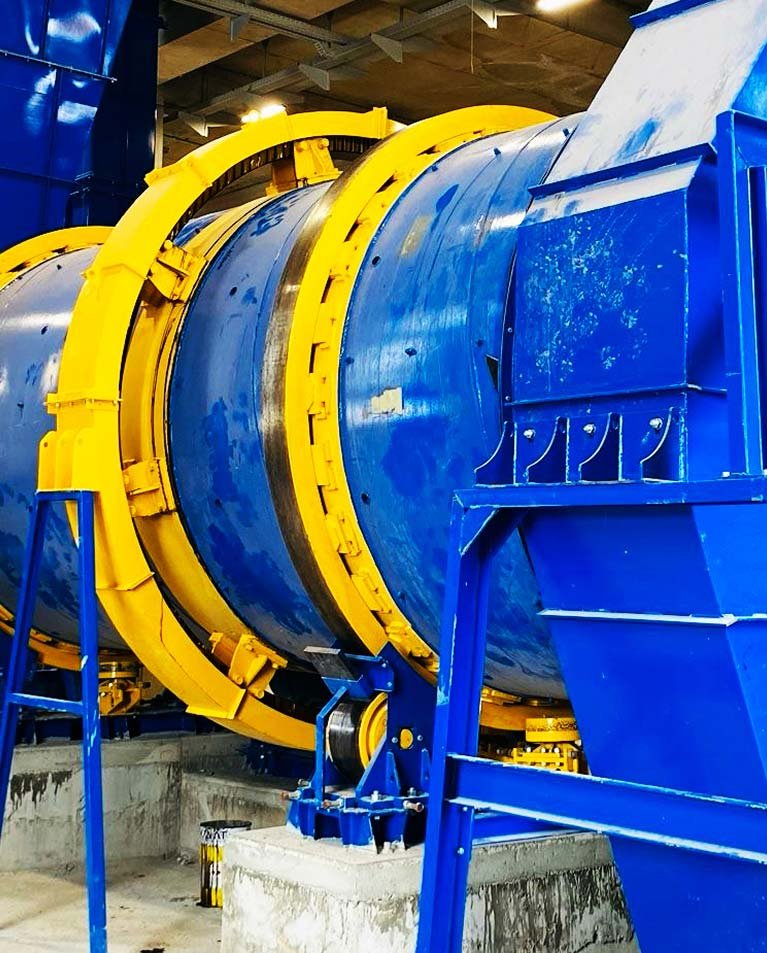
- Process Optimization: Our engineering team focuses on designing fertilizer granulation plants that run lean and energy-efficient. This includes precise sizing of granulation drums, optimizing retention time, and fine-tuning rotary dryer airflow and temperature profiles. By integrating heat exchangers and heat-recovery systems, we help fertilizer companies reduce energy consumption by close to 20%, lowering operational costs while supporting sustainability goals in the fertilizer industry.
Types of Fertilizer Plant Designs We Make
NPK Granulation Facilities
We specialize in steam granulation and dry granulation (using roller presses) to produce consistent, high-strength granules. These granulation methods are carefully selected based on the specific fertilizer formulation and desired granule size, ensuring optimal product performance. Our expertise also includes optimizing process parameters to enhance granule strength and moisture content, which are critical for storage stability and ease of application.
MAP/DAP Production Plants
Our MAP (Monoammonium Phosphate) and DAP (Diammonium Phosphate) production plants are designed to efficiently convert ammonia and phosphoric acid into high-quality phosphate fertilizers. We focus on precise control of reaction conditions to maximize yield and purity while minimizing by-products. The plant design incorporates corrosion-resistant materials and advanced heat exchange systems to handle the highly acidic environment. Additionally, our process engineering ensures optimal granulation and drying stages, producing fertilizers with excellent solubility and nutrient availability for crops.
Bulk Blending Facilities
Bulk blending facilities are engineered for the accurate and uniform mixing of various dry fertilizer components to meet specific nutrient formulations. Our designs include automated batching systems that precisely weigh and blend raw materials, ensuring consistent product quality. We also integrate advanced material handling solutions to minimize cross-contamination and dust emissions. These systems are flexible, allowing quick adjustment of blend ratios to respond to changing market demands or crop requirements. Safety features and environmental controls are incorporated to protect workers and comply with regulations.
Liquid Fertilizer Plants
Our liquid fertilizer plants feature precision dosing and mixing systems capable of producing a wide range of liquid nutrient formulations, including urea ammonium nitrate (UAN) and specialty liquid fertilizers. The design emphasizes accurate flow control, thorough mixing, and temperature regulation to ensure homogeneity and stability of the final product. We utilize corrosion-resistant tanks and piping to handle aggressive chemicals safely. Automation and real-time monitoring enable efficient production and quality control, while integrated storage and loading systems facilitate smooth logistics.
Micro-Granular Plants
Micro-granular fertilizer plants are specialized facilities designed to produce fine granules with precise size distribution, ideal for targeted nutrient applications such as micronutrients or starter fertilizers. Our designs employ advanced sieving and classification technology to achieve consistent particle size and reduce dust generation. The plants incorporate gentle granulation and drying processes to preserve nutrient integrity. Compact and modular layouts allow installation in limited spaces or integration into existing production lines. These facilities support tailored fertilization strategies that improve crop uptake efficiency and reduce environmental impact.
Production Capacity and Scale
Our design of production processes and facility layout caters to a wide range of operational scales, addressing key considerations such as raw material flow, energy efficiency, and environmental standards. The fertilizer plant designs we make are typically:
- Pilot Units: Small-scale plants starting at 500 kgs per hour, ideal for testing new processes and innovations in house before full-scale deployment.
- Turnkey Industrial Facilities: Medium to large-scale plants up to 50 tons per hour, engineered for robust chemical fertilizer production with optimized product formulation, high-performance fertilizer production equipment, and maintenance plans.
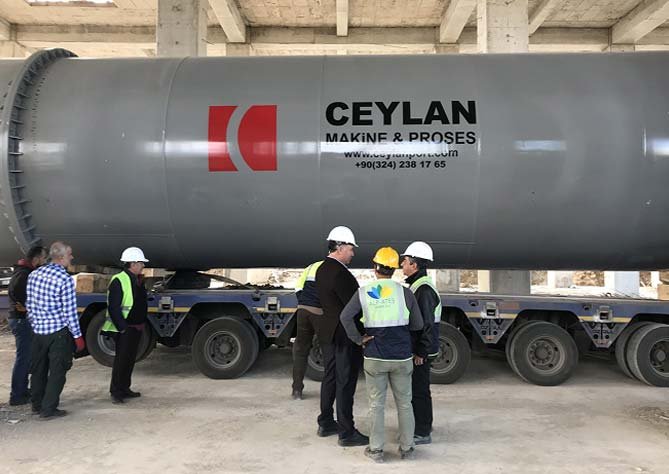
- High-Capacity “Twin” Facilities: We can also design massive operations like our 80 tons per hour twin NPK facility project in Iskendrun, incorporating advanced automation and sustainable agriculture practices to meet high demand efficiently.
Work With Us
Having provided fertilizer manufacturing equipment and plant process engineering services to several manufacturers in Turkey and Europe over the last 20 years, we prioritize efficiency in our operations. Our designs come with a one-year guarantee on machinery, and we can also guarantee your production/capacity tonnage.
We offer a 48-hour quote service for fertilizer plant designs, meaning that if you provide all your production requirements and space, our engineering team will design a 3D model and provide a quote with capacity and equipment within a week. Fill out our form to get started.
Frequently Asked Questions
What’s the actual protection against corrosion from acids and urea?
In areas exposed to phosphoric acid and urea, we use high-spec corrosion-resistant alloys and industrial-grade coatings to ensure durability. Additionally, our designs include advanced air handling and scrubber systems that effectively remove corrosive vapors from sensitive electronics and structural components, preventing the common corrosion issues found in lower-quality fertilizer plants.
How do you handle site-specific constraints like tight floor space or low ceilings in your fertilizer plant designs?
We avoid generic layouts by customizing every design through detailed 3D modeling to address site-specific challenges before construction. Whether dealing with restrictive column placements or limited ceiling heights, we adjust granulation drum angles or implement compact modular pipe reactors to optimize equipment fit within your plant’s unique footprint.
What happens after the one-year warranty ends?
Our support extends well beyond the one-year warranty. Built on a SCADA/PLC platform, our plants allow remote 24/7 monitoring and troubleshooting from our headquarters. We also provide comprehensive operator training during the startup phase to ensure your team fully understands and efficiently manages the equipment throughout its lifecycle.