



Your NPK granulation line’s success or failure hangs in the balance on one crucial decision you make at the design stage: how you get that binder into the drum. Get it wrong, and your plant is going to be a constant headache – excessive fines, dust complaints from the neighbours, and a dryer that’s working overtime trying to keep up. But get it right, and your granulator does most of the heavy lifting for you.
There are basically two low-water ways to deliver the binder in NPK production: steam granulation, where solid raw materials are agglomerated with steam and a little water, and pipe-reactor granulation, where the binder arrives as a hot, low-moisture melt made by neutralising acid with ammonia inside the reactor itself. (The third, older route – spraying a wet pre-neutraliser slurry into the drum – is what both of these were developed to improve on.) . Both can produce a top-notch granule, but they go about it in very different ways – and it’s these differences that show up in your operating costs, emissions profile, and capital outlay.
What each System Actually Does
Steam granulation uses steam to condition the powder bed inside the drum, adding controlled heat and moisture to promote nucleation and layered granule growth. All of the nutrients enter the drum as solids – MAP or DAP powder, potash, ammonium sulphate, filler – dosed to the target grade; there is no reaction section at all. The steam adds just a bit of moisture and heat, but not too much just enough to dissolve the surfaces of the salt particles and form liquid bridges between them, which recrystallise into solid salt bridges as the granule dries and cools. This means only a modest amount of water needs to be evaporated later on, and your granule is already pretty close to the target when it leaves the drum.
Pipe-reactorgranulation, on the other hand, makes its binder on the spot: phosphoric acid and ammonia are fed into a pipe (or pipe-cross) reactor, and the heat of the neutralisation reaction flashes off most of the water at the discharge, so the binder arrives as a hot ammonium-phosphate melt – sprayed onto the rolling bed through nozzles or a distributor. The melt can bring more of the total nutrient load into the drum as liquid, which gives the granulator more binding liquid to work with – while carrying only a few percent of water into the process.
Both systems rely on the same basic physics: nucleation, layering, and coalescence inside a rotating bed. The binder method changes the moisture level in the system, how it gets distributed, and how much energy the rest of the line needs to deal with as a result and, just as importantly, where that energy comes from.
Product Quality
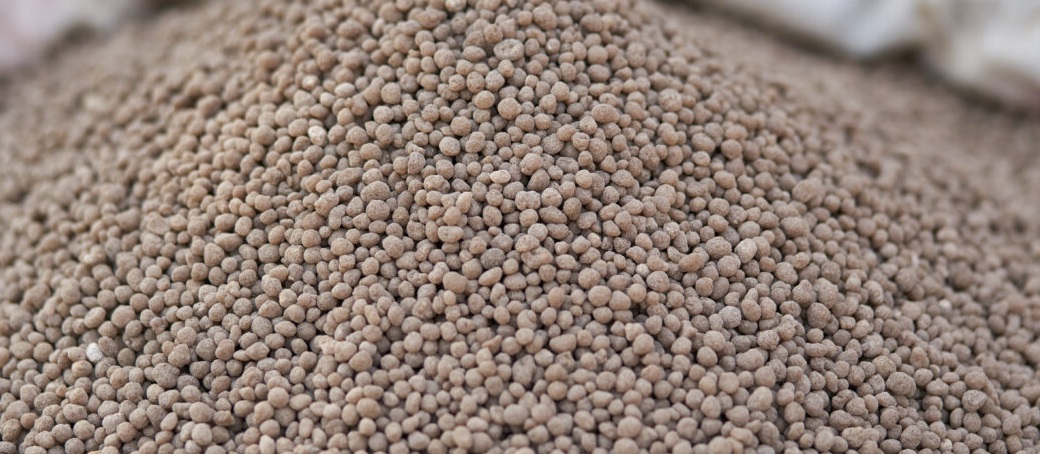
Pipe-reactor granulation usually produces a harder, denser granule. The reaction heat helps tighten up the layering around the nucleus, and because very little water is introduced overall, the granules come out of the granulation drum with less internal porosity. This generally means better crush strength and less attrition during bagging, transport and handling – and that’s more important than you might think, since a granule that survives production but breaks down in the bag is still a quality failure in the eyes of the farmer.
Steamgranulation can certainly produce great product quality too, but it does require a bit more finesse. Granule strength comes from recrystallised salt bridges rather than a solidified melt, and the strength of those bridges depends heavily on the salt matrix of each formulation – some grades naturally granulate harder than others. Getting consistent granule strength across different NPK grades is therefore a matter of formulation know-how, steam rate and moisture control rather than reaction control. If you’re consistently running the same grades, you can dial this in and a well-kept recipe library is what makes frequent grade changes painless.
Dust Generation
This is where the two systems differ less at the dryer than you might expect – both run far drier than an old-style slurry plant – and more in where the dust actually comes from. Pipe-reactor systems generally run with the least excess moisture downstream – which means the dryer doesn’t need to work as hard, and the dense, melt-bonded granules stand up well to attrition. The emissions story on a pipe-reactor line is usually about scrubbing – ammonia slip and fume from the reactor – rather than particulates from broken granules.
Steam systems, on the other hand, handle a lot of dry powder upstream of the drum – dosing, conveying, and milling solid raw materials all generate dust before granulation even starts – and salt-bridge granules are more sensitive to over-drying. If the dryer runs too hot, or if moisture control gets a bit wonky, you end up with granules that either degrade in storage or shatter at the hammer mill – and both of those produce fines and dust that you need to capture, screen out, and recycle.
Neither system eliminates dust – pipe reactor systems start from a lower moisture point and harder granule, which gives the rest of the line a bit of a break, while a steam line earns its keep through disciplined solids handling and dryer control.
Energy Input
Steam granulation usually carries an energy penalty downstream, because every extra percentage point of moisture introduced at the granulator has to be evaporated in the dryer – and the steam itself is imported energy, raised in a boiler and paid for in fuel. Drying is one of the most energy-intensive steps in most NPK lines, so even small differences in inlet moisture add up to real differences in fuel consumption per tonne. Pipe reactor systems yank a lot of that energy burden upstream – right into the reaction itself.
The heat-generating neutralisation reaction in the pipe reactor effectively gets handed over to the granulation bed, warming up the product before it even hits the dryer – essentially for free, since it’s chemical heat you’d otherwise have to throw away in a separate neutraliser. A well-integrated pipe-reactor line can knock the fuel consumption per tonne dried down dramatically – on some formulations the dryer shrinks to a polishing duty or disappears altogether.
Capital Cost
Steam systems often look cheaper on the granulator line – a steam manifold, spargers under the bed and solid dosing equipment tend to be less capital-intensive than the pipe reactor, especially when we’re talking about things like ammonia and acid handling, instrumentation, and materials that have to be able to withstand corrosion.
But that’s an incomplete picture if you stop at the granulator. A steam system will generally need a boiler (or spare boiler capacity), a full solid raw-material dosing section, and it pays for its chemistry in the raw material price – solid MAP or DAP powder already carries someone else’s reaction and drying costs in every tonne. Pipe reactor systems come with a higher upfront cost just in that reaction section, but you can often get away with a smaller dryer and lighter dust-control load for the same throughput target – and you’re buying your N and P as acid and ammonia, which is usually the cheaper form per unit of nutrient.
When looking at capex, you need to compare the total installed cost across dosing, reaction, granulation, drying and dust control all as one system – not just granulator against granulator – and weigh it against the delivered cost of the raw materials each route consumes.
Which Should You Choose?
There’s no one-size-fits-all answer, but there are some useful rules of thumb:
If you’re after high product quality and you’re dealing with a premium grade or you’re selling into an export market with strict physical property requirements – pipe-reactor systems often make it easier to get consistent crush strength and low attrition.
If you’re planning on being the kind of operation that does lots of grade changes with relatively simple blends and you’re on a tight capital budget – a steamsystem can be a workable starting point- changing grade is mostly a matter of changing the solid dosing recipe, with no reaction chemistry to re-balance, provided you have reliable access to solid intermediates like MAP or DAP powder at workable prices.
If there’s tight environmental regulation on energy use – pipe-reactor systems often have the easier compliance path because there’s less moisture to pull out and the reaction heat comes free – though budget properly for ammonia scrubbing, which becomes the emissions story instead of dust.
If you’re building a new plant and you plan on having to grow your capacity in the long term – you might want to model those energy and dust-control costs out over a 10-year operating horizon rather than just going on the initial price quote of the machinery – the difference between the two approaches tends to grow as the plant gets bigger, and so does the raw-material question: at scale, competitive access to phosphoric acid and ammonia tilts the economics towards the pipe reactor, while a steam line lives or dies on the delivered price of its solid intermediates.
The Real Question to Ask Your Supplier
Whatever binder approach you’re looking at, make sure you’re asking for real process data, not just some flow chart: what’s the granule crush strength like at the dryer outlet? What’s the moisture content going in and out of the dryer? What’s the recycle ratio under normal conditions? What’s the dust loading at the major transfer points? And on a pipe-reactor line – what’s the ammonia loss across the scrubber? A supplier who can show you real numbers from an actual running plant – not just the targets from the design – is telling you much more about how reliable the thing is than any brochure ever will.
If you’re looking at a new NPK line or you’re trying to compare binder systems for a plant upgrade you’ve already got up and running, our engineering team can help walk through the trade-offs against your specific product mix and capacity target.