
Industrial Hammer Mills for the Fertilizer Industry
As trusted hammer mill manufacturers, our industrial hammer mill is a high‑speed, rotary grinding machine that reduces fertilizer granules, minerals, or recycled materials into precise particle sizes—down to sub‑1 mm—by repeatedly impacting them with wear‑resistant hammers. If you’re looking for a commercial hammer mill for fertilizer production, this is it.
Precision Particle Control
Grinding below 1mm (90% of total input)
Heavy-Duty Construction
Fertilizer size reduction hammer mills are engineered with robust, wear-resistant materials to handle abrasive fertilizer
Time-Saving Maintenance
Features quick-access doors and modular components, reducing downtime
Unique Features of Our Industrial Double Hammer Mills
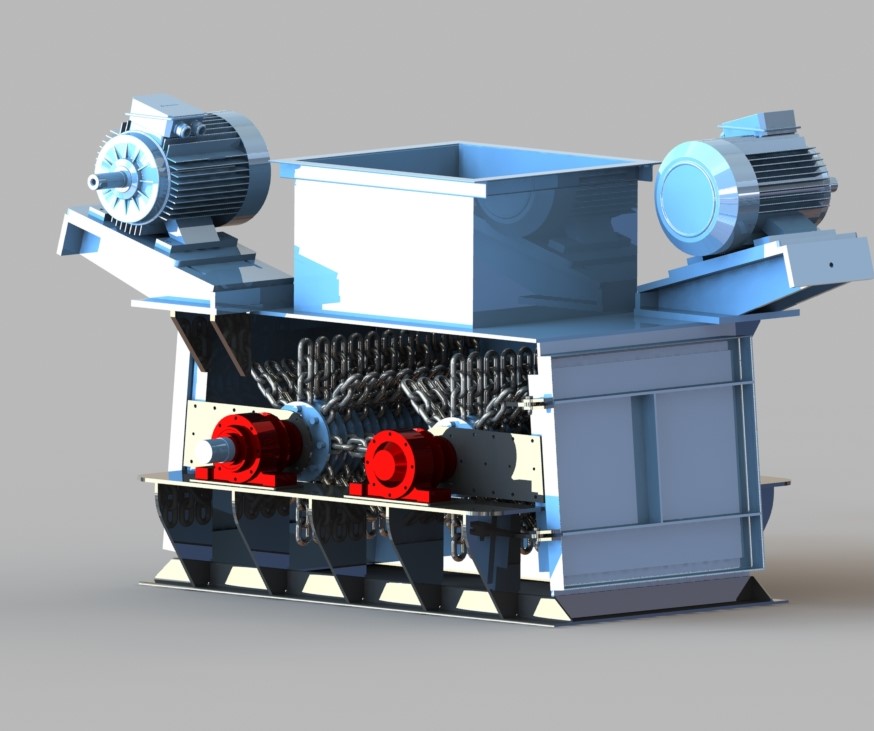
Ceylan Machine & Process produces a double hammer mill, an industrial hammer mill designed specifically as fertilizer grinding equipment.
It turns coarse fertilizer inputs into a fine powder with ease. This high-performance fertilizer mill uses a dual-rotor (double hammer) system that pulverizes material thoroughly while ensuring a consistent output.
Key Features and Benefits of Our Industrial Double Hammer Mills (with Specifications):
- Precision Particle Control:
In our experience as hammer mill manufacturers, precision particle control is a key advantage of the double hammer mill. The mill consistently grinds material to sizes below 1 mm, with roughly 90% of the input reduced to this fine powder range. Such fine particle milling yields an extremely uniform output, which improves fertilizer blending and pelletizing processes. - Heavy-Duty Construction:
The fertilizer size reduction hammer mill features heavy-duty construction to withstand the rigors of industrial use. Such durability is necessary for an industrial hammer mill grinder handling abrasive fertilizer materials. Each machine is built with robust, wear-resistant materials, so it stands up to abrasive fertilizer ingredients like phosphate rock, potash, and other minerals. Critical components, such as the hammers, are made from hardened alloy steel to minimize wear.
- Time-Saving Maintenance:
Time-saving maintenance features keep your operation running smoothly. The industrial hammer mill’s design includes quick-access doors and modular components that make routine inspections and part replacements fast and safe. Maintenance crews can reach wear parts easily—no complicated disassembly required—so tasks like swapping out screens or hammers are done in minutes, not hours. By minimizing maintenance downtime, the double hammer mill maximizes uptime and productivity in your fertilizer production line.
- High-Volume Processing:
For producers with high output demands, the double hammer mill from Ceylan Machine & Process delivers high-volume processing capacity. Its powerful dual-rotor drive and efficient design ensure a steady, high throughput of material with each run. Hammer mill manufacturers optimize the industrial hammer mill for continuous operation and the ability to handle long shifts and heavy loads while maintaining consistent performance. This high-capacity capability allows fertilizer plants to meet large production targets while keeping energy consumption per ton low. For large fertilizer facilities, a fertilizer size reduction hammer mill like ours means no more grinding bottlenecks—material flows smoothly and on schedule. In short, you can process more fertilizer, faster—without sacrificing quality or efficiency.
- Low-Dust Operation:
Dust control is a major concern in many fertilizer production environments, where airborne particulates can pose safety and health risks. To minimize these issues, Ceylan Machine & Process’s Double Industrial Hammer Mill incorporates a low-dust operation design. Enhanced sealing around the feed inlet, discharge points, and inspection doors reduces the chance of fine particles escaping the milling chamber. An optional dust suppression or collection system can further contain emissions. This thoughtful approach not only contributes to a cleaner, safer work environment but also helps you meet stricter regulatory standards.
- Energy Efficiency:
Rising energy costs push fertilizer producers to seek out solutions that offer more output for less power consumption. Hammer mill manufacturers address this need with the double hammer energy-efficient design. Carefully balanced rotors, optimized hammer arrangements, and streamlined airflow channels all work together to reduce the industrial hammer mill’s overall power draw. By maintaining a steady grind without excess strain on the motors, you can lower your operational expenses while still producing the fine, uniform fertilizer particles your customers expect.
- Environmental Compliance:
Integrated dust suppression systems, including bag filters and cyclones, ensure particulate emissions remain below 5 mg/m³, aligning with global environmental standards.
Why Choose Our Double Hammer Mills?
The Ceylan Machine & Process fertilizer size reduction hammer mill combines heavy-duty construction, easy maintenance, and high capacity in one package. Fertilizer manufacturers gain a reliable, high-performance grinding solution that enhances product quality while reducing operational headaches.
Backed by decades of engineering expertise in fertilizer machinery, our industrial hammer mill is a solution you can trust to improve your production process. With all these advantages, this industrial hammer mill can become the cornerstone of an efficient fertilizer production line.
Exploring various manufacturers’ hammer mill designs can provide valuable insights into the range of features and innovations available in the market. For instance, FEECO International offers detailed information about its hammer mills.
Frequently Asked Questions
How do operators control the final particle size?
By screen selection and rotor speed. If the screen opening changes, the cut size changes too. Operators don’t rely on trial-and-error once the right setup is established.
What materials require the industrial hammer mill in fertilizer plants?
Mainly dry, brittle materials require the use of hammer mills. Oversized fertilizer granules, recycled fines, crushed minerals, and screened rejects are the most common. It’s not meant for sticky or slurry-type feeds.
Can it run abrasive materials without constant failures?
Yes, if wear parts are treated as consumables. Hammers and liners are designed to be replaced. Therefore, plants that plan wear into maintenance schedules don’t see unexpected shutdowns.
How often are hammers replaced in practice?
There are no fixed intervals. Some plants are inspected weekly, others monthly. Replacements happen when particle size drifts or power draw increases, not by calendar days.